LITHIUM STARTING SOLUTIONS
COMPACT POWER. READY WHEN YOU NEED IT.
Portable lithium starting power for cars, 4WDs, vans, light trucks, tractors and machinery.
Go to a different starting solution
🟩 Supercapacitor Jump Starters | 🟥 Lead Acid Jump Starters | 🟧 Installed Starting Systems
WHEN YOUR BATTERY WON’T START, PORTABLE POWER MATTERS
Lithium jump starters deliver high starting power from a compact, lightweight battery pack. They are designed to provide the short burst of current needed to start a vehicle without the size and weight of a traditional lead-acid jump pack.
Their portability makes them particularly useful across a wide range of applications, from cars, 4WDs and vans through to light commercial vehicles, heavy trucks, tractors, agricultural machinery and workshop equipment, especially where a starting solution needs to be carried between vehicles or kept ready for emergency use.
Many modern lithium jump starters also provide portable power for phones, tablets and other accessories, giving them a useful role beyond simply starting an engine.
The right lithium jump starter should be matched to the vehicle, engine size and application. High-capacity lithium jump starters are well suited to heavy trucks, agricultural machinery, earthmoving equipment and workshop use. In some workshop situations, however, an engine may require extended cranking before it can start — for example when fuel needs to be pumped or primed through the system after servicing. Applications that involve unusually long or repeated cranking should be considered separately from a normal engine-starting requirement.
LOST PRODUCTION
Equipment isn’t earning while it’s sitting idle.
SERVICE CALL-OUTS
Getting assistance to remote machinery costs time and money.
OPERATOR DOWNTIME
Operators and crews can be left waiting.
LITHIUM BATTERY TECHNOLOGY EXPLAINED
Lithium is not a single battery type. It is a family of battery technologies, and the chemistry, cell construction, discharge capability and battery management all influence how well a lithium battery performs in a jump starter.
For jump starting, the important requirement is the ability to deliver very high current for a short period. That is why high-rate lithium cells are used in compact jump starters: they can provide strong cranking power without the size and weight of a traditional lead-acid battery pack.
TYPES OF BATTERIES USED IN LITHIUM STARTING SOLUTIONS
Lithium Polymer (LiPo)
High-rate Lithium Polymer cells can deliver very high current from a compact and lightweight battery pack. This makes them well suited to portable jump starters where strong cranking performance and low weight are important.
Lithium Iron Phosphate (LiFePO₄)
LiFePO₄ batteries are known for good thermal stability, long cycle life and strong discharge capability. They are particularly useful in larger or frequently used starting applications where durability and repeated cycling are important.
Battery chemistry is only one part of jump starter performance. Cell quality, discharge capability, battery management, internal electronics, cable size and overall unit design all affect how well a jump starter performs under real starting loads.
WHY LITHIUM WORKS SO WELL FOR JUMP STARTING
Lithium batteries can deliver a large amount of power from a relatively small and lightweight package. For jump starting, that high power-to-weight ratio allows a portable unit to supply the high current required by a starter motor without the bulk of a traditional lead-acid jump pack.
Lithium jump starters are also convenient to store and transport. Smaller units can remain in a car or 4WD, while larger high-output units can be carried between trucks, tractors, machinery and workshop bays as required.
Modern lithium jump starters can also offer much more than starting power. Depending on the model, features may include USB-C fast charging, USB power outputs, 12V accessory power, built-in lighting and voltage monitoring.
For commercial and heavy-duty applications, larger lithium jump starters combine portability with substantial cranking capability, making them practical for workshops, agricultural operations, transport fleets and field service.
LITHIUM STARTING SOLUTIONS: CHOOSING THE RIGHT JUMP STARTER
Our lithium starting solutions range covers compact portable units through to heavy-duty 12V and 24V jump starters.
These lithium starting solutions are grouped by system voltage to make selection easier.
Choose the system voltage used by your vehicle or equipment, then select the jump starter that suits the engine size and application.
🟩 6V & 12V LITHIUM JUMP STARTERS
For 6V & 12V Starting Systems
Lithium jump starters for vehicles and equipment using 6V or 12V starting systems, from cars and 4WDs through to vans, tractors, machinery and heavy-duty 12V trucks.
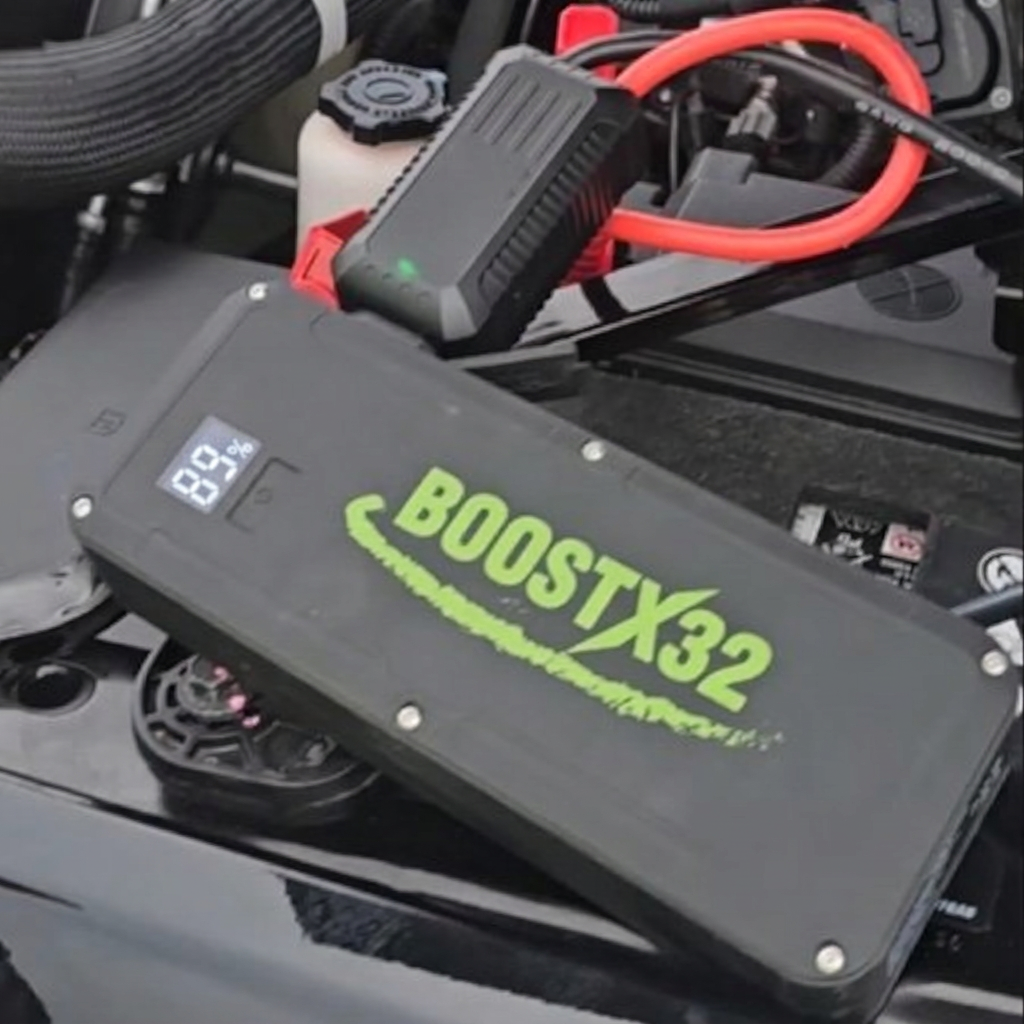
Cars, 4WDs & Light Vehicles
Compact lithium jump starters for everyday vehicles, recreational use and lighter commercial applications.
🟧 12V & 24V LITHIUM JUMP STARTERS
For 12V & 24V Starting Systems
Lithium jump starters for equipment using 12V or 24V starting systems, including trucks, buses, agricultural equipment, earthmoving machinery and other commercial applications.
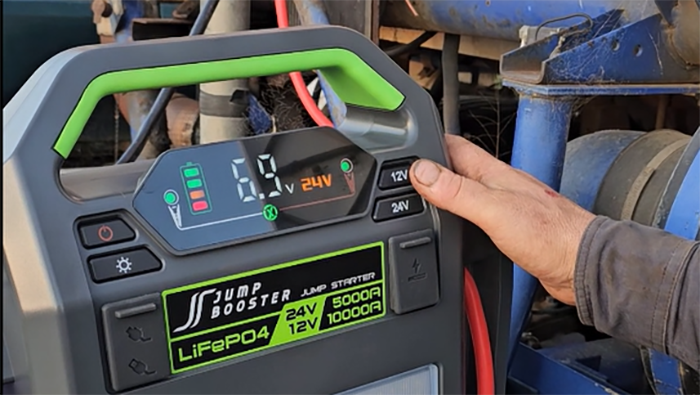
Heavy-Duty, Commercial & Machinery.
Higher-output lithium jump starters for trucks, tractors, agricultural equipment, workshops and demanding commercial use.
WHAT TO CONSIDER WITH LITHIUM JUMP STARTERS
Traditional starting systems depend heavily on batteries being charged and healthy. Supercapacitor starting technology takes a different approach, delivering the high current needed to crank large engines when starting power is required.
For trucks, earthmoving equipment, agricultural machinery and industrial applications, that can mean faster recovery, less downtime and greater starting reliability.
KEEP YOUR UNIT CHARGED REGULARLY
Lithium jump starters need to be recharged periodically so they are ready when needed. Check the charge level from time to time, especially if the unit has been stored for an extended period.
MATCH THE UNIT TO THE APPLICATION
Choose the jump starter based on the vehicle, engine size, system voltage and expected cranking demand. Heavy trucks, agricultural machinery and workshop applications may require a much higher-output unit than a car or 4WD.
USE THE CORRECT CHARGER
Recharge the unit using the charging method specified for that model. Some modern lithium jump starters support fast charging, while larger commercial units may use dedicated chargers or higher-capacity charging systems.
STORE AND USE IT APPROPRIATELY
Keep the jump starter in a suitable location, protected from unnecessary heat, moisture and physical damage. For units stored in vehicles or workshops, follow the manufacturer’s storage and charging recommendations.
HOW A LITHIUM JUMP STARTER WORKS
A lithium jump starter stores electrical energy in a high-rate lithium battery pack. When connected to a vehicle battery, it can deliver a very high current for the short period needed to crank the starter motor.
The complete starting system is more than just the battery cells. Internal electronics, safety protection, heavy-current cables and clamps all work together to control and deliver power to the vehicle during starting.
01
CONNECT
Connect the jump starter to the vehicle battery using the correct polarity and follow the operating instructions for the unit.
02
DELIVER STARTING POWER
The lithium battery pack supplies high current through the cables and clamps to support the vehicle battery and crank the starter motor.
03
RECHARGE AND BE READY
After use, recharge the jump starter as required so it is ready for the next vehicle, machine or emergency start.
LITHIUM STARTING SOLUTIONS: SAFETY AND GOOD CHARGING PRACTICE
Lithium batteries offer an excellent combination of power, energy storage and compact size. Like all high-energy battery systems, however, they need to be charged, stored and handled correctly.
Lithium batteries can present a fire risk if they are damaged, overheated, incorrectly charged or exposed to unsuitable conditions. In rare cases, an internal fault or severe damage can lead to thermal runaway, where heat generated inside the battery causes a rapid increase in temperature.
Good charging and storage practices help reduce these risks:
Use the correct charger. Use the charging equipment and method specified for the product.
Inspect before charging. Do not charge a jump starter that is damaged, swollen, leaking, unusually hot or behaving abnormally.
Choose a suitable charging area. Charge away from excessive heat, moisture and easily combustible materials.
Follow the manufacturer’s instructions. Observe recommended charging temperatures, storage conditions and charging procedures.
Protect the unit from physical damage. This is particularly important when jump starters are stored in vehicles, workshops or machinery.
For homes, workshops and workplaces where lithium-powered devices are regularly charged, a dedicated charging area or purpose-designed lithium battery charging and storage cabinet can provide an additional layer of separation and organisation.
Different battery chemistries have different safety, storage, weight and energy-density characteristics, so the most suitable battery technology depends on both the application and the required performance.
For further guidance on lithium battery charging, storage and safe use, see the Australian Government’s Product Safety guidance on lithium-ion batteries.
NOT SURE WHICH OF OUR LITHIUM STARTING SOLUTIONS SUITS YOUR APPLICATION?
You’ve now seen how lithium jump starters work, where they fit and what to consider. You can browse the lithium range, answer a few quick questions to get a product recommendation, or speak with us directly.
WHICH STARTING SOLUTION IS RIGHT FOR YOU?
Whether you need a portable jump-starting solution or permanently installed starting power, the right system depends on how your equipment operates.
Compare the three main starting technologies below to help identify the solution that best suits your vehicle, equipment and operating requirements.
🟦 LITHIUM STARTING TECHNOLOGY
LITHIUM BATTERY JUMP STARTERS
Portable jump starting along with useful stored energy.
Compact, high-output starting power that can also provide portable energy for accessories and devices.
BEST FOR
- Cars, 4WDs and vans
- Trucks and commercial vehicles
- Agricultural machinery
- Workshops and service vehicles
- Customers wanting portable power as well as starting capability
🟩 SUPERCAPACITOR STARTING TECHNOLOGY
SUPERCAPACITOR STARTERS
High-current starting without relying on a lithium battery pack.
Well suited to demanding starting applications where rapid energy delivery, frequent use and long service life are priorities.
BEST FOR
- Heavy trucks and machinery
- Workshops and fleets
- Agricultural and earthmoving equipment
- Frequent starting applications
- Portable or permanently installed starting solutions
🟧 LEAD ACID STARTING TECHNOLOGY
LEAD ACID JUMP STARTERS
Traditional battery-based starting power with portable power.
A proven starting technology that can provide strong cranking performance and stored energy when weight and portability are less important.
BEST FOR
- Cars, workshops and service vehicles
- Trucks and heavy machinery
- Applications requiring longer cranking periods
- Longer-duration 12V accessory power
- Preference for a lead acid battery-based starting equipment
Quick Comparison
Compare the key differences below to quickly identify the starting technology that best suits your vehicle, equipment and operating requirements.
| Feature | Lithium Jump Starters | Supercapacitor Jump Starters | Lead Acid Jump Starters |
|---|---|---|---|
| Starting Power | High to very high | Very high current delivery | High |
| Portability | Excellent — high power from a compact package | Very good — varies with unit size and application | From compact portable units to heavier commercial packs |
| Stored Energy | Good | Low — designed primarily for high-power starting | Very high |
| Cranking Capability | Strong — duration depends on unit size and application | Strong high-current cranking with rapid energy delivery | Very good — particularly for longer cranking periods |
| Recharge Speed | Fast to moderate depending on charging system | Very fast | Generally slower |
| Storage / Routine Charging | Periodic charging recommended during storage | No routine charging required; can remain unused for extended periods with very little degradation | Regular charging recommended to maintain battery condition |
| Maintenance | Low | Low to maintenance-free | Higher — regular charging and battery care required |
| Portable Accessory Power | Very good on suitably equipped models | Limited — not primarily designed for stored accessory power | Excellent for longer-duration 12V-compatible loads |
| Typical Applications | Cars, 4WDs, commercial vehicles, trucks, agriculture, machinery and workshops | Heavy trucks, machinery, agriculture, fleets, workshops and frequent starting applications | Small vehicles through to workshops, trucks, machinery and applications needing stored energy or longer cranking |
NOT SURE WHICH STARTING SOLUTION YOU NEED?
Choosing between lithium, supercapacitor and lead-acid starting technology depends on the vehicle, engine size, operating environment and how the jump starter will be used.
If you’re not sure which option best suits your application, use the Jumpbooster Product Finder. Answer a few quick questions and we’ll recommend the most suitable product based on your requirements.